

 CFP
CFP
Private Health Expenditure in Portugal: An International Comparative Analysis

This article summarises some of the key findings from the CFP’s occasional publication on the Portuguese healthcare system from an international perspective, focusing on the financing structure and the share of spending borne by households. The analysis draws on OECD data for 2022 and covers a representative sample of countries with diverse models of healthcare system organisation and financing.
1. Public health spending: Portugal's comparative position
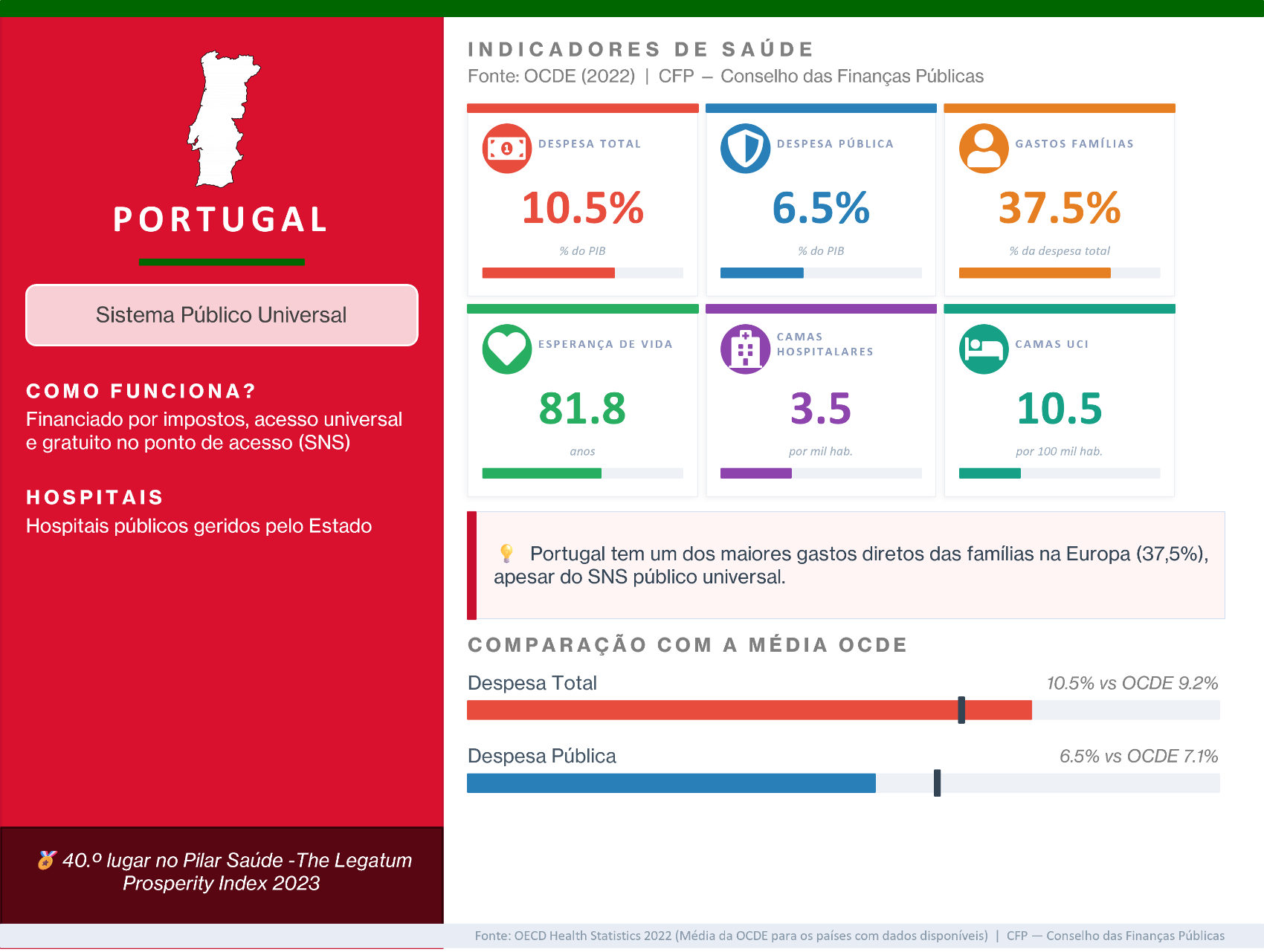
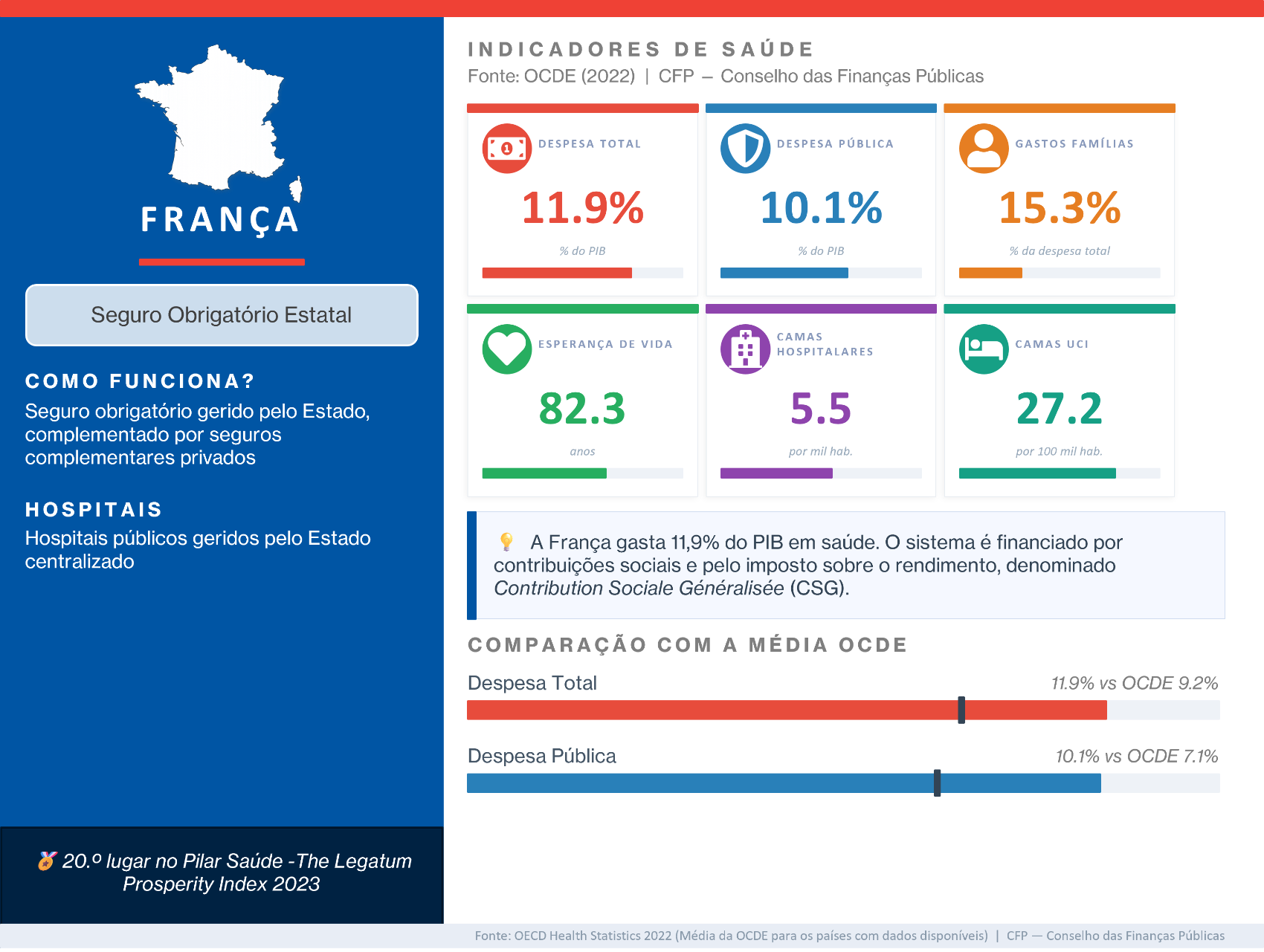
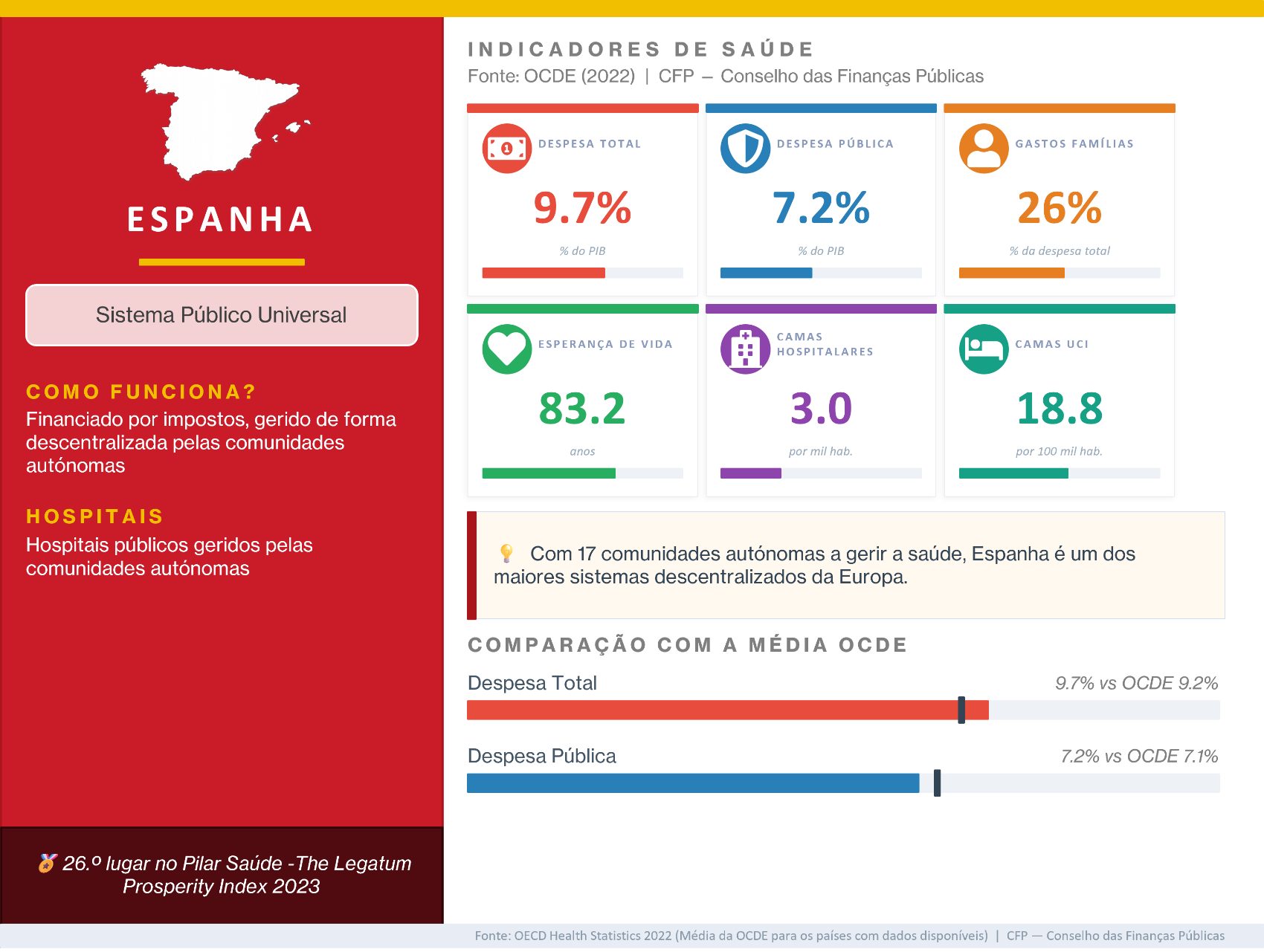
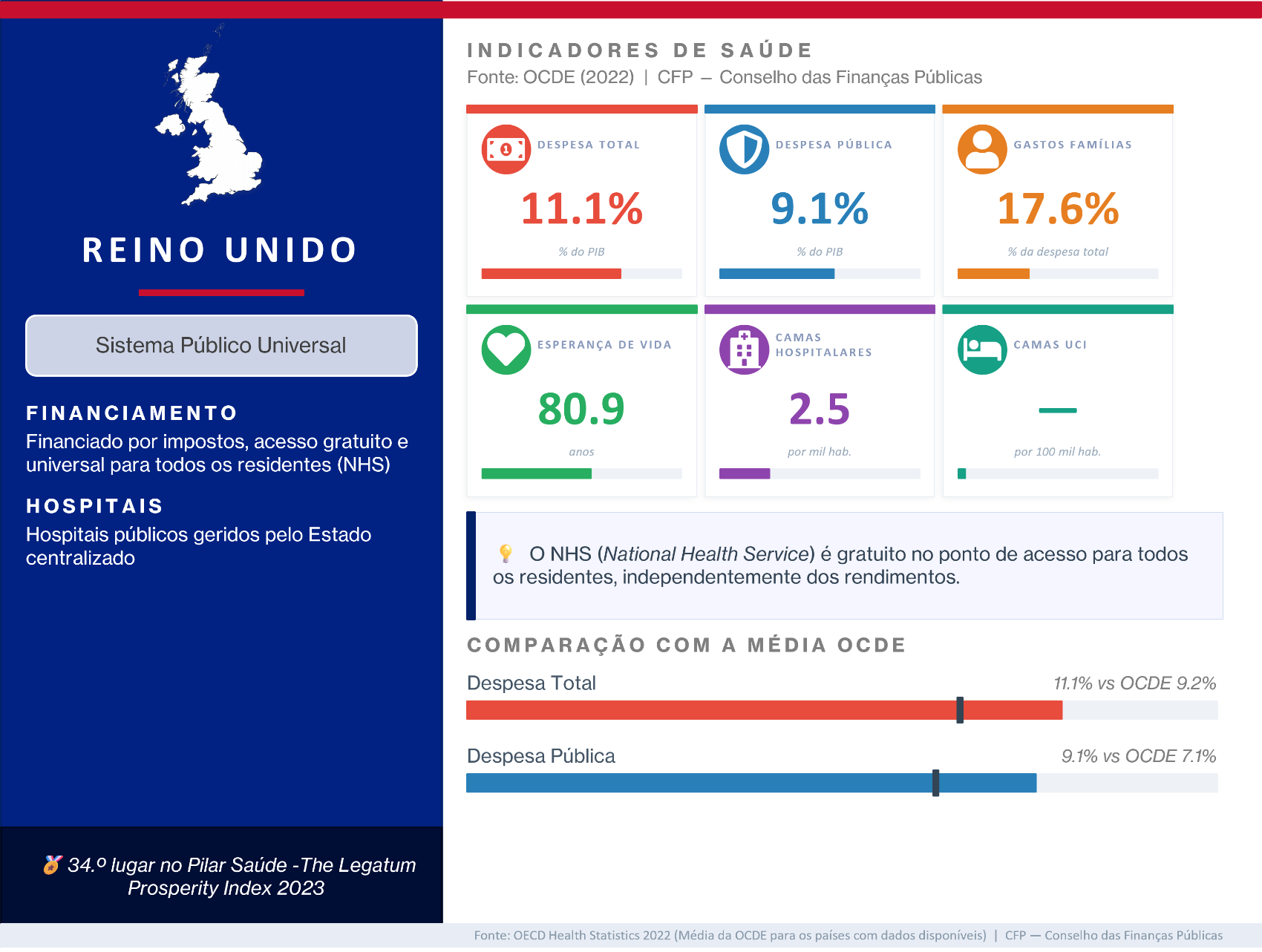
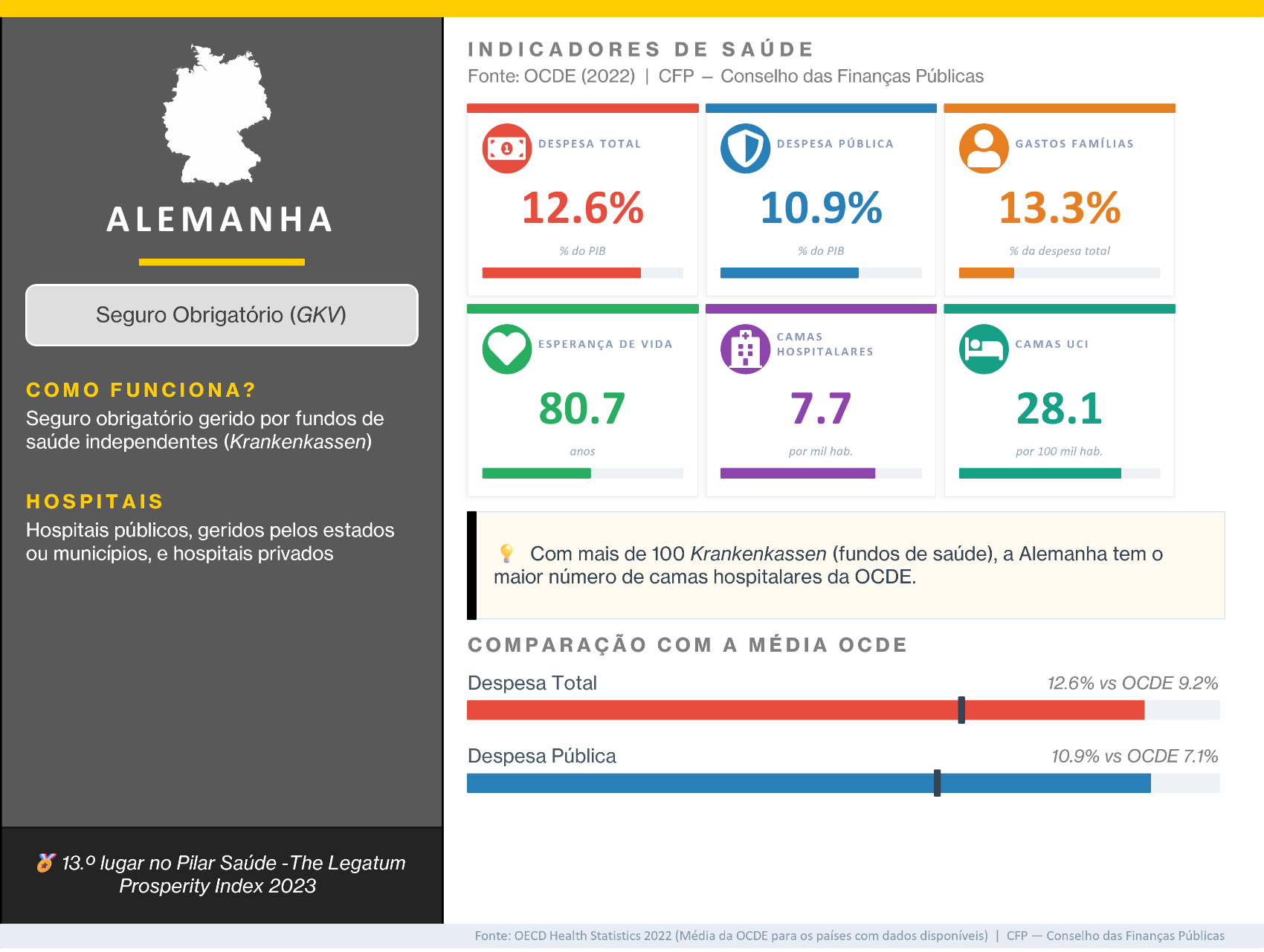
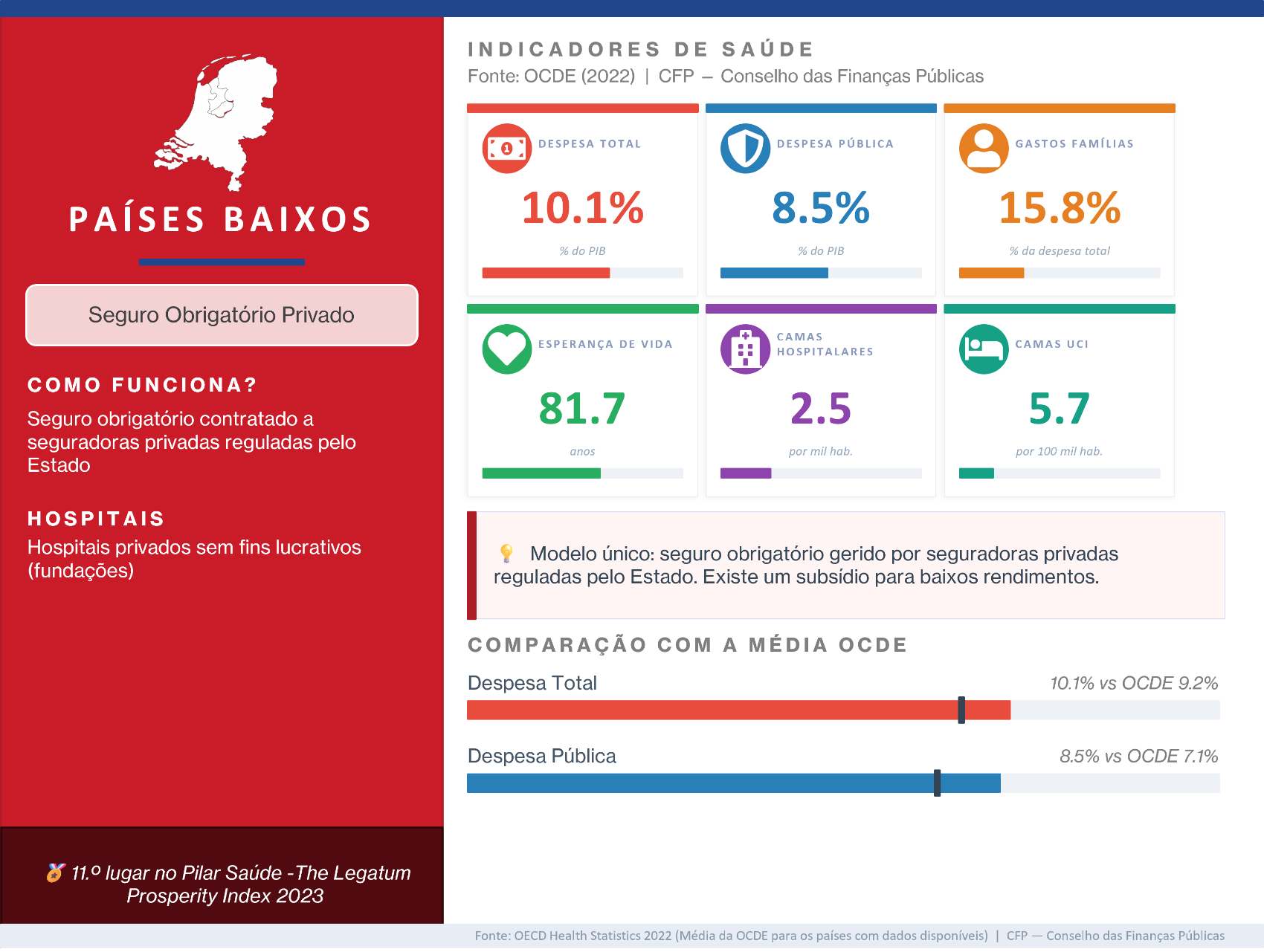
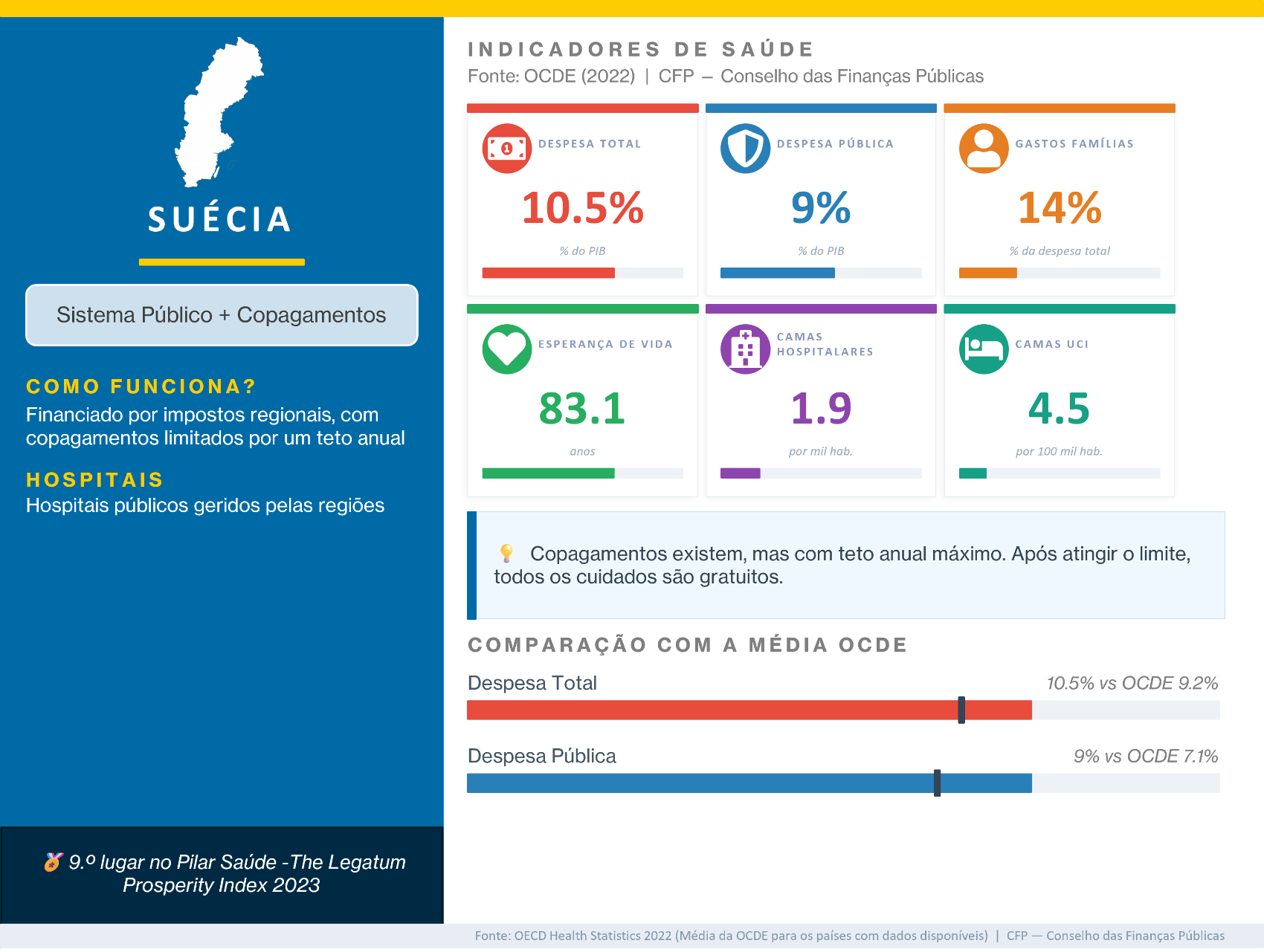
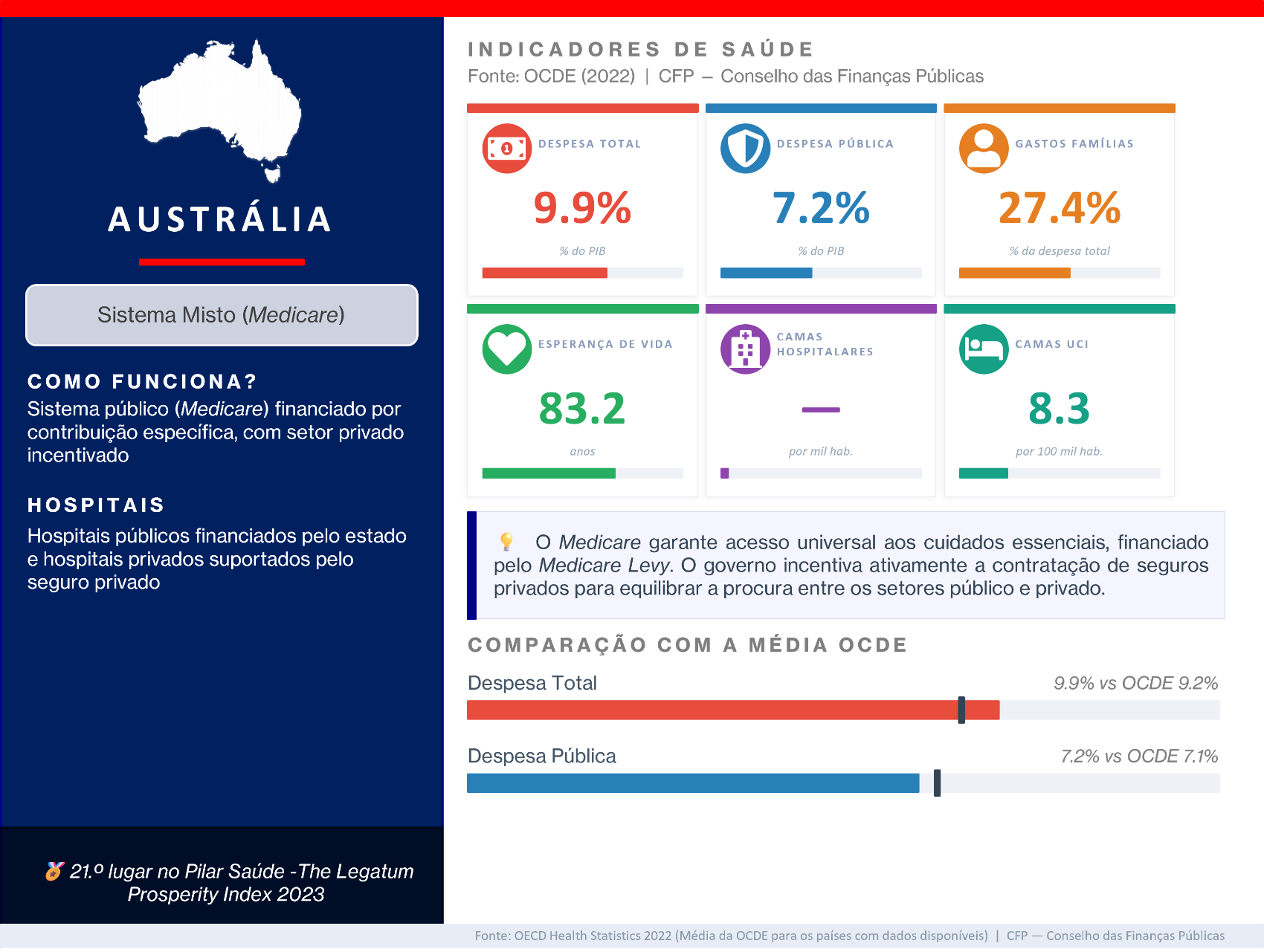
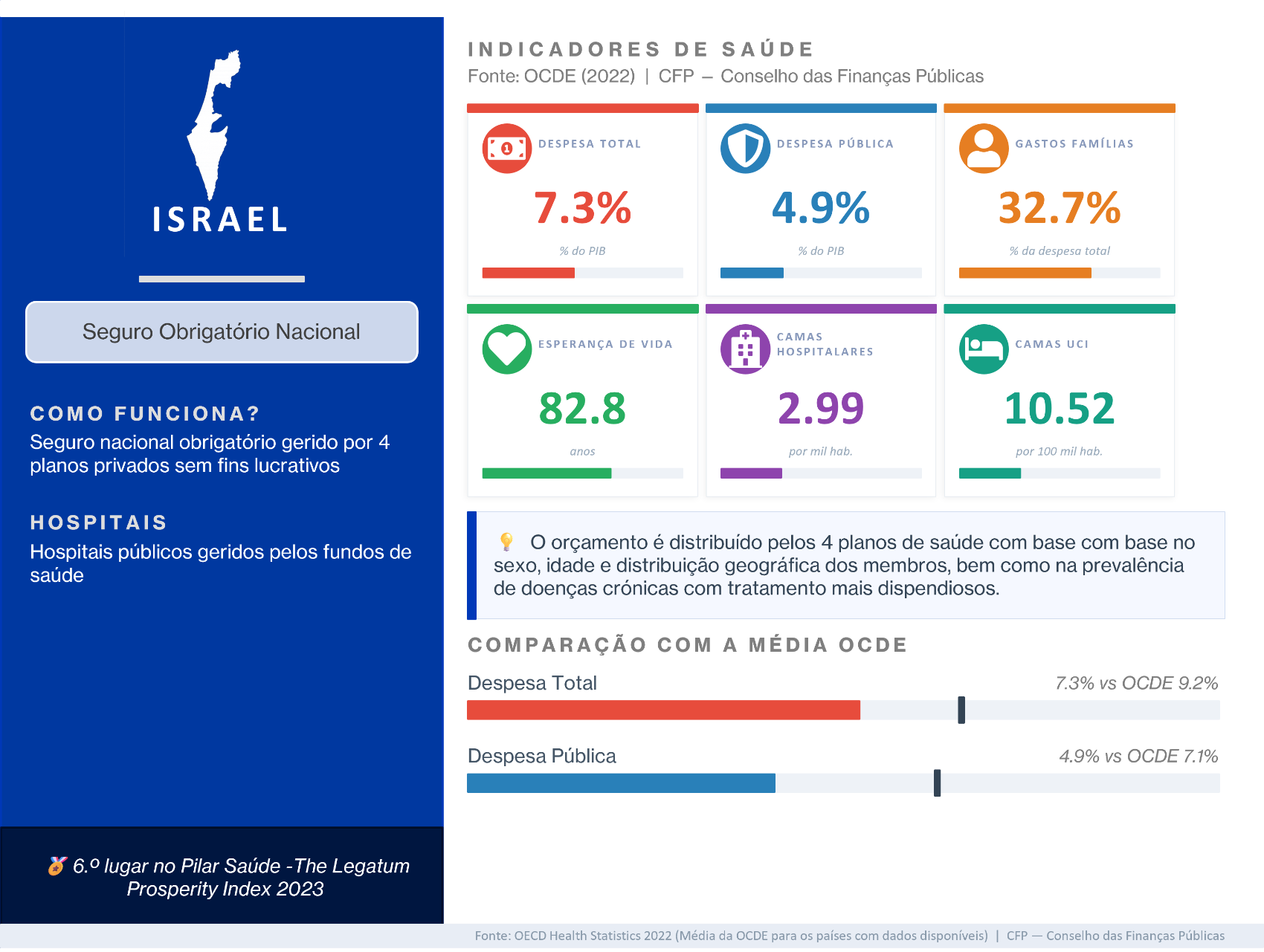
In 2022, public health spending in Portugal accounted for 6.5% of GDP, falling below the OECD average and countries such as France (10.1%), Germany (10.9%), the United Kingdom (9.1%), and Sweden (9.0%) (as shown in the infographic below). In per capita terms, Portugal’s position is closer to that of Central and Eastern European countries than to its Western European peers, which partly reflects structural differences in income levels and the costs of production factors in the health sector.
In terms of the financing structure of public health expenditure, Portugal differs from other countries due to its high degree of reliance on direct public funding: in 2022, approximately 87% of National Health Service (SNS) expenditure was covered by government transfers, the highest proportion among OECD countries with available data. This figure reflects both the centralised nature of the system and the gradual reduction in user fees observed in recent years, which has decreased users’ contribution to the SNS’s current financing. For comparison, countries with universal public systems, such as Sweden, Norway, and Denmark, have a significant proportion of state funding, but lower than Portugal’s, as they maintain copayment mechanisms, although with annual protection limits.

2. Direct Household Health Spending: Comparative Evidence
An analysis of the structure of total health expenditure reveals that out-of-pocket expenditures by households accounted for 37.5% of total health expenditure in Portugal in 2022. This indicator includes, mainly, expenditures on curative and rehabilitative care (16.4% of total health expenditure) and expenditures on medical goods, particularly medications (9.2%). Compared to countries with formal copayment systems or mandatory health insurance, Portugal has significantly higher figures: in Germany, the direct expenses account for 13.3% of total health expenditure, in the Netherlands, 15.8% and in Sweden, 14.0%. In all these cases, the figures are substantially lower than those recorded in Portugal, despite the existence of explicit mechanisms for user financial participation.
The relatively high proportion of total healthcare costs borne by households in Portugal is largely due to shortcomings in the public healthcare system. Waiting times for surgical procedures have shown a worsening trend over the past decade: the proportion of patients waiting more than three months for hip replacement surgery rose from 48% in 2013 to 65% in 2023. Similarly, access to oral and mental healthcare shows significant gaps compared to the European average, with 29% and 28% of Portuguese citizens reporting unmet needs in these areas in 2019, respectively, compared to 11% and 4% on average in the EU. The public system’s inability to respond leads to the financial burden being shifted to households, although protection mechanisms are associated with this spending, their voluntary nature and low levels of participation leave many households without effective coverage.
3. International references and implications for the Portuguese system
A comparison with other models of organisation and financing allows us to identify some relevant points of reference for the debate on the sustainability and efficiency of the SNS. In the Swedish case, the coexistence of a universal public system with moderate copayments and annual protection caps has simultaneously encouraged a more prudent use of services, ensured protection for chronically ill patients or those with longer-term needs, and kept out-of-pocket costs for families at levels considerably lower than those in Portugal. In this model, copayments do not constitute a barrier to access, but rather a tool for managing demand and sharing responsibility for financing the system.
In countries with mandatory health insurance, such as Germany and the Netherlands, the regulated participation of private entities in the financing and delivery of care has contributed to greater allocative efficiency and to the reduction of direct costs for households. In both cases, the government plays a key regulatory role, ensuring universal access and equity in cost-sharing.
An analysis of these experiences does not imply a direct transposition of models to the Portuguese context, given that the suitability of any reform depends on the institutional, historical, and socioeconomic specificities of each system. However, the data suggest that maintaining a largely free system, without mechanisms for user co-payment, does not in itself guarantee a reduction in families’ actual healthcare costs and may, under certain conditions, have the opposite effect.
4. Concluding considerations
The occasional publication by the CFP that serves as the basis for this article identified a set of guidelines for consideration regarding the financing options for the SNS: an assessment of the feasibility of a mandatory health insurance model, a review of tax incentives for private insurance, with a possible focus on specific population segments and a study of the introduction of progressive copayment mechanisms with annual protection limits, aligned to equity criteria.
Regardless of the policy options that may be considered, the comparative analysis shows that the financial sustainability of the SNS and the containment of households’ out-of-pocket expenses are complementary objectives that require a structured approach to the issue of financing. It is important to note, however, that the trend towards free care does not guarantee a reduction in the actual burden on households and may, under certain conditions, have the opposite effect. In this context, regular monitoring of expenditure and accessibility indicators is an essential tool for decision-making.
Date of last update: 07/04/2026
About this Blog
Contraciclo is a forum for the views of the Portuguese Public Finance Council (CFP) staff and members on economic issues. The views expressed are those of the author(s) and do not necessarily represent the views of the CFP. Therefore, they cannot be attributed to the CFP or to the Senior Board under no circumstances.

Related Articles
 Social Protection . 14 July 2023

